#4: Why Is It So Hard to Make Friends in Your 20s? (I Swear This Used to Be Easier)
8 min read
Making friends in your 20s feels harder than it used to. A personal reflection on growing up, changing friendships, and starting over as an adult.
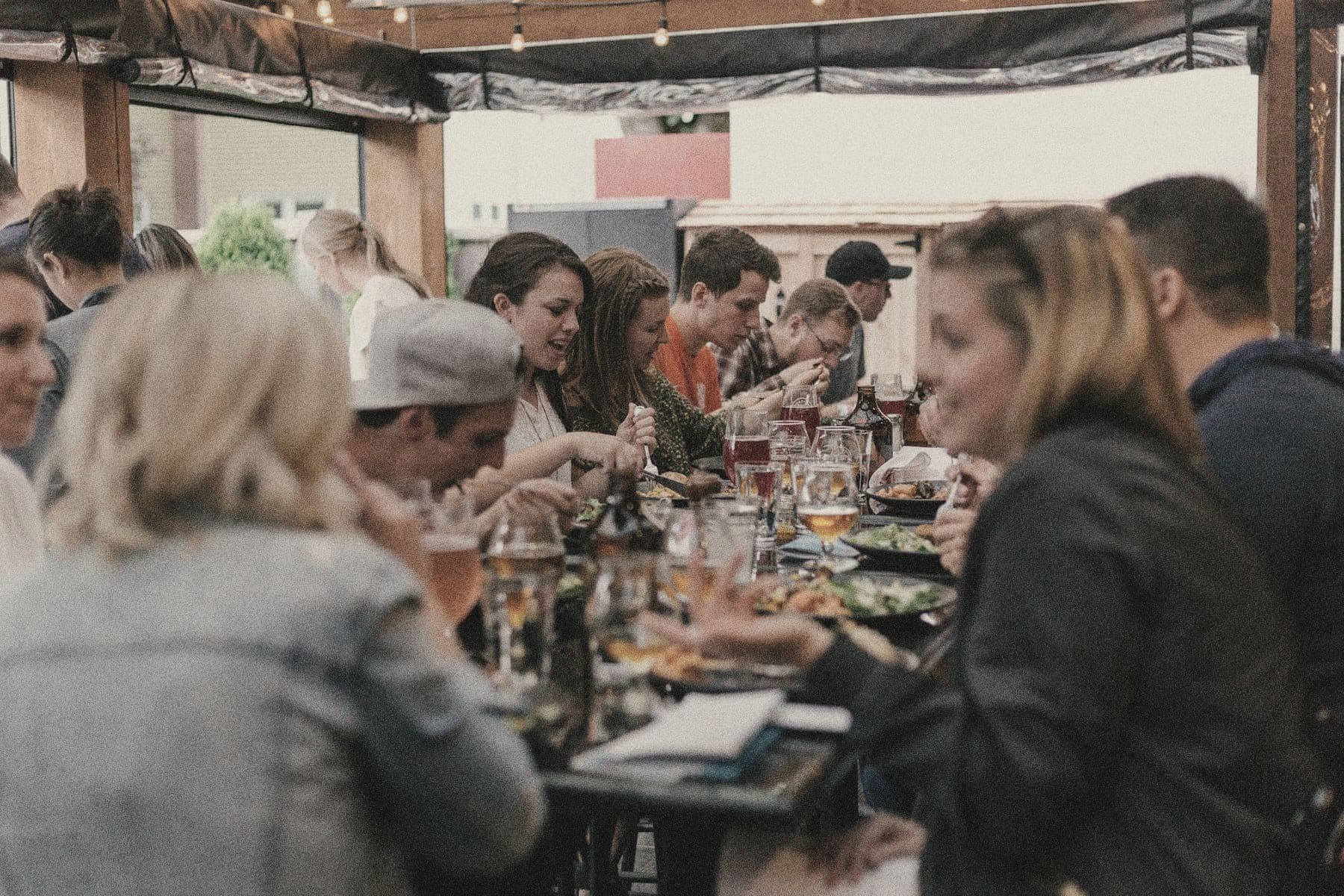
Whether you’re new to my blog or you’ve been reading for a while, I hope the overall feeling you take away from it is a positive one. Yes, I talk about struggles and life’s many obstacles, but that’s because I genuinely see life as a gift. It can just be hard to appreciate when we’re constantly stressing about time and feeling like we need to be a certain person, or have certain things figured out, by a certain age—or else we’re doing life the “wrong way.”
Because of some recent changes in my relationships and career, I’m in a period of restarting and rediscovering myself. I know that sounds cheesy, but I don’t really know how else to describe it. Anyway, I recently moved to a new city where I don’t know anyone. I’ve been spending a lot of time reading, walking, eating out, and occasionally going to social events alone.
None of that makes me special, and I know it’s not unusual. But as someone who spent most of his life in his hometown, with an established group of friends up until entering the workforce, it’s unfamiliar territory.
Moving to a new city without friends has given me a firsthand look at how people seem to be socializing—or struggling to—these days. And I gotta say, some of what I’ve seen is disappointing and, honestly, a little concerning.
When I scroll through Facebook, Reddit, and Instagram, I see so many posts from people in their 20s, both men and women, who say they have no close friends. Zero. Some describe spending huge chunks of their days rotting in bed and doomscrolling. Every so often, someone will post into the void asking if anyone wants to hang out, whether they can tag along to someone’s Halloween plans, or whether anyone else struggles to make and maintain friendships. Sometimes those posts seem to fall on deaf ears.
Obviously, my social media feed isn’t a representative sample. But the loneliness behind those posts is a real concern. In a 2021 Statistics Canada survey, 23% of Canadians aged 15–24 and 15% aged 25–34 said they felt lonely often or always. That’s not the same thing as having no close friends, but it does put some numbers behind what I’m seeing.
Now, you certainly don’t need 100 close friends or a packed social calendar to have a fulfilling life. But we’re human, and we’re social creatures by nature. The Harvard Study of Adult Development has spent decades exploring the role that meaningful relationships play in happiness and well-being, so I think this is worth unpacking.
Here are a few reasons I think so many people in their 20s are having a hard time making friends.
Social Media
As the first—and arguably biggest—culprit, social media tends to bring out mixed feelings. Some see it as a beautiful way to connect with the diversity and creativity humanity has to offer. Others consider it one of mankind’s worst inventions. With takes that polarized, I usually find the truth somewhere in the middle, or at least a little truth on both sides.
I first downloaded Instagram in 2013, when it was still relatively new, and I loved posting low-quality, candid photos of my friends and me just meandering around and living life. That was more or less what the app was originally for. (In retrospect, posting photos that showed our house, neighborhood, and surroundings at 13 probably wasn’t the smartest idea. But something, something, hindsight, right?)
I deleted Instagram in high school and stayed off social media until the pandemic. Bored and isolated, I downloaded Instagram again, along with TikTok.
The change from the Instagram I remembered was astonishing. What had once felt like a place to share real moments had become a corporate machine flooded with influencers, advertisements, and algorithms seemingly designed to make you angry, nostalgic, self-conscious, and, above all, glued to your screen. I’ll spare you a longer rant because I’m guessing you know exactly what I mean. TikTok felt like more of the same, only with an endless stream of short-form videos that did my attention span no favors.
And there is some evidence behind the concern about algorithms. One research audit of Twitter’s feed found that its engagement-based ranking amplified emotionally charged, divisive political content compared with a chronological feed. That doesn’t prove Instagram and TikTok behave in exactly the same way, but it does make me question what we’re being encouraged to consume.
Researchers are already looking into the broader effects, too. The U.S. Surgeon General has raised concerns about social media’s potential mental health risks for adolescents, while acknowledging important gaps in the evidence. A Canadian public health report also found that the pandemic was associated with increased loneliness and lower well-being among school-age youth. I suspect it’ll take years to understand the full picture, especially when it comes to social development.
Luckily, I don’t think I was among those who suffered the worst effects of pandemic-fueled isolation or social media algorithms potentially stunting social development, largely because I was already in my 20s when these became such widespread concerns. But my heart absolutely goes out to those who weren’t so lucky, especially those who were still growing up and developing their social skills during that time.
That brings us to today. I think these experiences have contributed to two patterns in particular:
-
Isolation can make avoiding people feel normal. You go six months without much in-person interaction and tell yourself, “I’m doing fine. I don’t really need to talk to people.” Then another six months pass. Socializing feels a little more intimidating, so you avoid it even more. Eventually, even a casual conversation can feel overwhelming compared with texting, where you have the luxury of taking your time to craft the “right” response.
-
Social media can distort how we see the world—and ourselves. Algorithms feed us not only what we love, but also what we loathe. Over time, your feed can create a warped picture of what the real world is like. You don’t just feel anxious about being socially awkward; you might start avoiding people because you’ve come to expect negative interactions. Meanwhile, seeing endless posts of beautiful, successful, seemingly satisfied people living the lives you want—and advertisements for everything you supposedly could be—can make your own life feel inadequate. Some people find that motivating. Others become so self-conscious that putting themselves out there feels impossible.
Economic Hardship
You don’t need to look very far to see that a lot of people are struggling financially. According to Statistics Canada’s 2024 housing survey, 27.9% of Canadian households reported financial difficulties due to increases in rent or mortgage payments, up from 22.6% in 2022. And that’s before getting into groceries, transportation, and everything else.
The future feels uncertain, too. In a 2025 Pew Research Center survey, 52% of U.S. workers said they were worried about AI’s future impact in the workplace. That doesn’t mean AI will take everyone’s job, but the anxiety around job security is clearly real. Add interest rates, environmental concerns, and everything else on people’s minds, and it’s a lot to carry.
When you’re worried about paying rent or whether you’ll still have a job next month, making new friends can start to feel like a luxury. You might ask yourself, “How am I supposed to build new friendships when I don’t even know if I’ll have a job next month?”
And honestly, that’s a valid concern.
Advice From a Regular Dude
You don’t have to take my advice. In fact, if you disagree, I’d genuinely like to know why. Or maybe you agree but don’t feel like you have the energy to make changes right now. Either way, leave your thoughts. I’d love to have a real back-and-forth.
First, I want to acknowledge something: you’re right. It’s not fair.
It’s not fair that you’re constantly hearing predictions about AI replacing jobs and are left worrying about your future.
It’s not fair that years of pandemic disruption made real-life socializing harder for so many people.
And it’s not fair that the joy you once got from social media has increasingly been exploited for financial gain.
None of that is your fault. But dealing with the effects is still, unfortunately, your responsibility. The truth is that nobody else can do it for you.
What helped me most was focusing on what I could control.
Can I control whether AI replaces my job? Not completely. Can I improve my skills and job performance to better prepare myself? Yes.
Can I guarantee that I’ll have income next month? No. Can I track my expenses and make a plan for a worst-case scenario? Absolutely.
My approach is to prepare as much as I reasonably can while trying not to waste energy on endless worry. After all, worrying without taking action doesn’t get you very far.
The same idea applies to socializing. I set a hard limit of one hour a day on my social media use. (That might sound like a lot, but at my worst, I was spending over seven hours a day scrolling.) I also make myself go to events around the city, even when going alone feels awkward.
Find somewhere that genuinely interests you and become a regular. It could be a gym, a run club, or anything else. It doesn’t have to be cliché, either. I frequent a nearby mahjong club, and I love it.
I’m confident you’ll find that a lot of people in your city are pretty cool and have more in common with you than you’d expect. They’re certainly not all like the version of the average person your Instagram feed might have led you to imagine.
Once you get the ball rolling, keep in touch. Send the first message. Make plans. Follow through. You’re not owed relationships with people, and friendship doesn’t happen without effort. It’s a two-way street.
I know all of this is easier said than done. But nobody said it would be easy. In my opinion, anything worth having takes effort, attention, and love, and your life deserves no less.
Nobody is watching or judging you as closely as you watch and judge yourself. At the end of the day, we’re all just trying to find meaning and have good experiences in this short life.
So be kind to yourself, and be kind to others.